-
Nikon Series E 135mm lens vs 3 aftermarket lenses
I know it’s a bit of a weird title! The title is deliberately a little vague, because at the time of creating the post I had no idea what other lenses I could obtain.
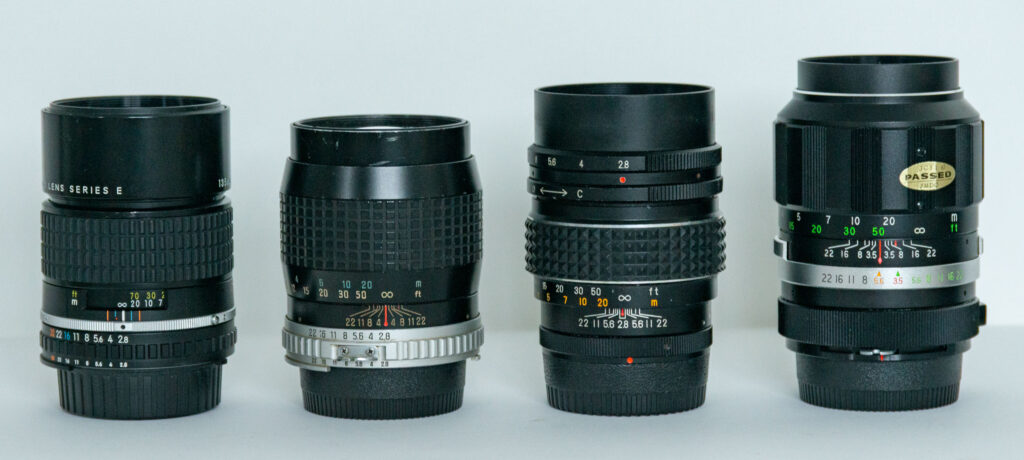
Now I have a quartet of lenses to test and compare – starting off we have the Nikon 135mm f2.8 ‘made to Nikon specification’ Series E lens, next is a Hoya 135mm f2.8, followed by a preset Access SQ 135mm f2.8 and finally a Soligor 135mm f3.5. All the lenses in this test were made circa 1980’s.
The purpose of the test was to see how well these vintage lenses perform with a full frame digital camera, as well as with traditional black and white negative film
A little background information
A good few years ago (alright a lot of years ago!) When zoom lenses were not so popular or refined as they are now, chances are that when buying a new lens to suppliment the standard 50mm lens that more than likely came with your camera, there were two choices a wide angle lens or a telephoto lens. If you opted for a telephoto, then chances were it would be a 135mm lens.
All the main camera manufacturers had their own version of a 135mm lens available – generally it would have a maximum aperture of f2.8 although one or two offered a slightly slower and cheaper option with a maximum aperture of f3.5. In addition to this there was a vast number of third party 135mm lenses available – in reality despite the number of brands on offer, the number of actual manufacturers was significantly smaller. Prime examples are in our test selection :The Nikon lens was made by Kino Optical (Kiron) to Nikon specifications, whereas the Hoya 135mm lens was a rebadged Tokina made lens (Hoya supplied the glass), Access 135mm was also available badged as a Photax lens amongst other names – the actual manufacturer could possibly have been Kobori, finally Soligor 135mm was made by Tokina.
Testing Procedure
For the colour digital tests the lenses were in turn attached to a Nikon D800 body mounted on a Camlink tripod, shutter actuated by remote control to eliminate movement. ISO set to 100, daylight balance, zero exposure adjustment, matrix metering, camera set to aperture priority and images recorded in Raw. Weather conditions were wind free with an overcast sky. Images were converted to Jpeg in Adobe Camera Raw with zero sharpness added.
A series of exposures were made from f2.8 (f3.5 Soligor) to f22 and lenses were focused at infinity for the photographs of the pier, whilst the photographs of the breakwater exposure was made at f8 and the lens was focused on the third breakwater upright using focus confirmation.
The black and white film tests were performed using a Nikon F90x loaded with Kodax Double X film and processed in 510 Pyro. Again the camera was mounted on my trusty Camlink tripod and shutter actuated by remote control. ISO was set to 100, zero exposure adjustment, spot metering and camera set to aperture priority. Weather conditions were sunny, bright and wind free. Images were scanned on a Plustek OpticFilm 7600i at 1800dpi using VueScan software with sharpening set to none.
Exposures were made at maximum aperture (f2.8 and f3.5 for the Soligor lens), f5.6 and f16 – lenses focused visually at infinity.
Specifications
Nikon Hoya Access Soligor
Focal Length 135mm 135mm 135mm 135mm
Construction 4 elements in 4 groups 5 elements in 4 groups 5 elements in 4 groups 5 elements in 4 groups
Aperture Range f2.8 – f32 f2.8 – f22 f2.8 – f22 f3.5 – f22
Focus Range 1.5m – Infinity 1.5m – Infinity 2.2m – Infinity 1.8m – Infinity
Filter Size 52mm 55mm 58mm 49mm
Weight 390g 407g 362g 393g
Length 104mm 79mm 88mm 95mm
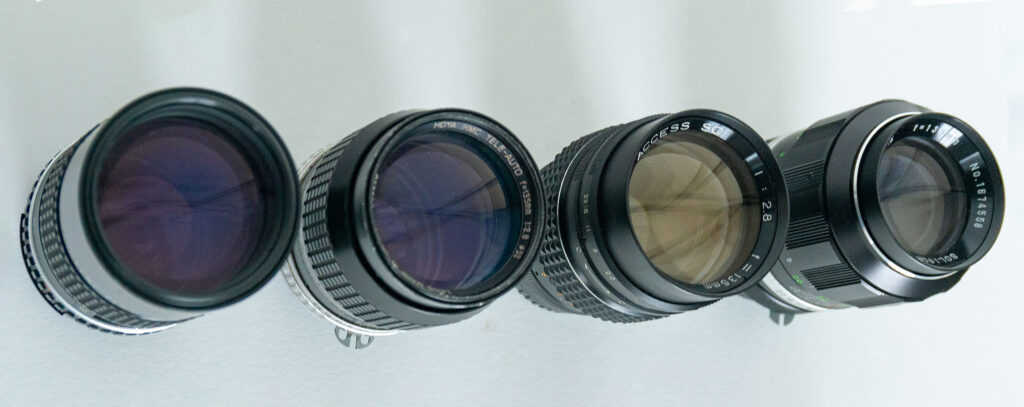
Notice how each of the lenses has a different coating on the optics, this results in a subtle difference in contrast and colour balance.
The Results
Digital

Nikon from f2.8 to f22

Hoya from f2.8 to f22

Access from f2.8 to f22

Soligor from f3.5 to f22
Digital mid range test.
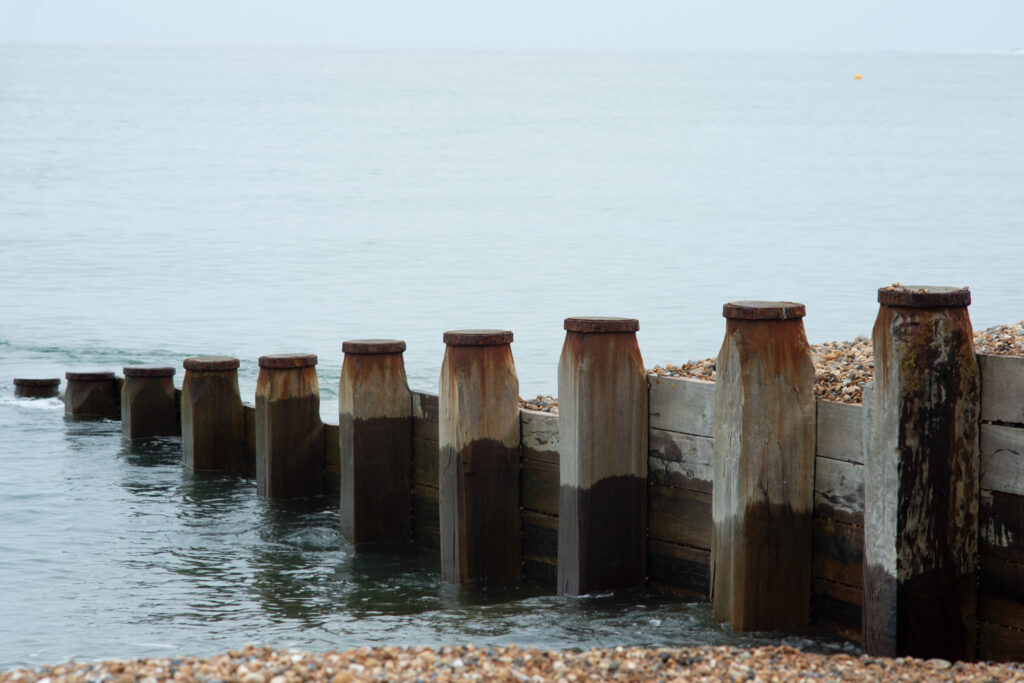
Nikon at f8
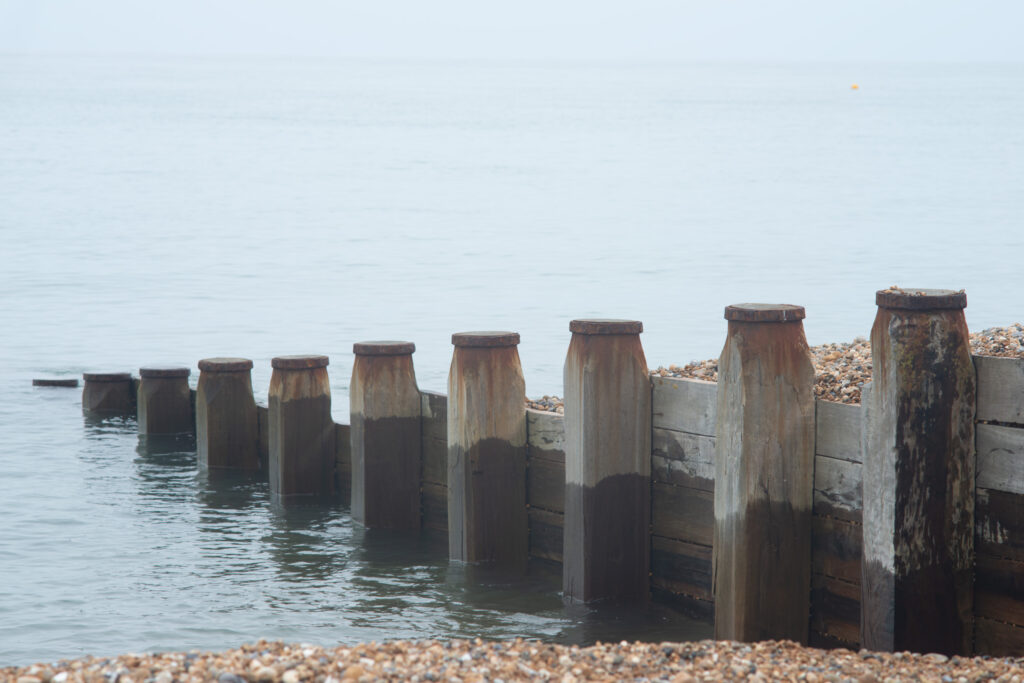
Hoya at f8

Access at f8

Soligor at f8
Black and white negative film
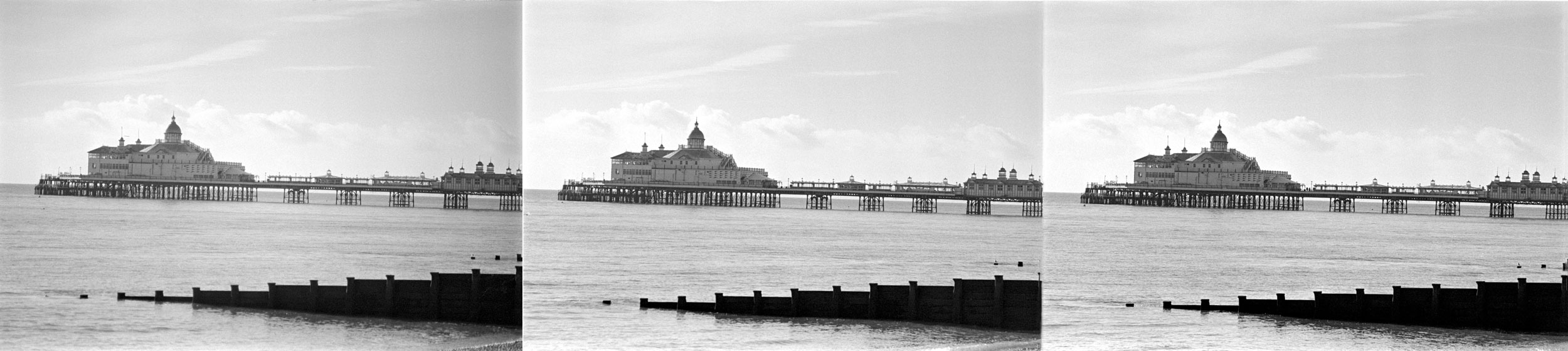
Nikon at f2.8, f5.6 and f16
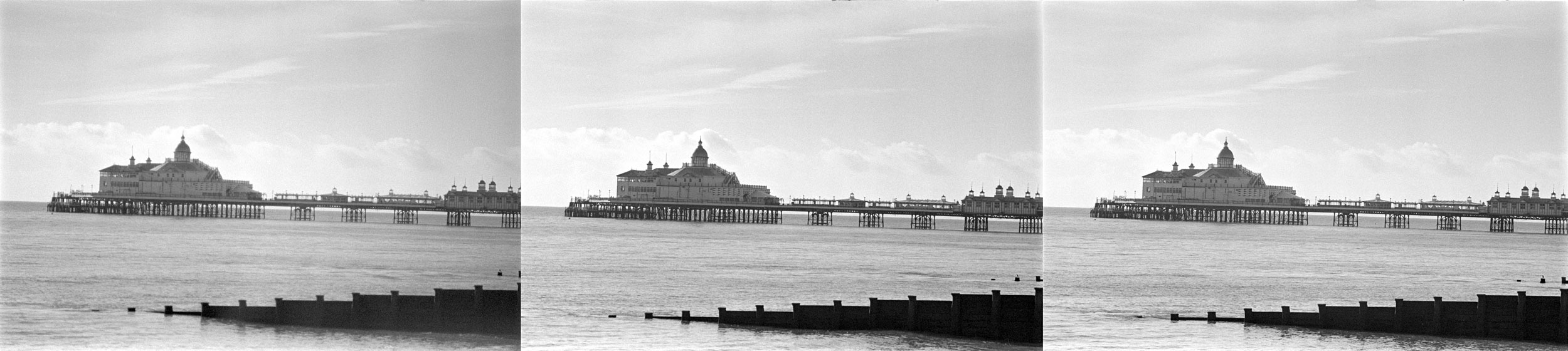
Hoya at f2.8, f5.6 and f16
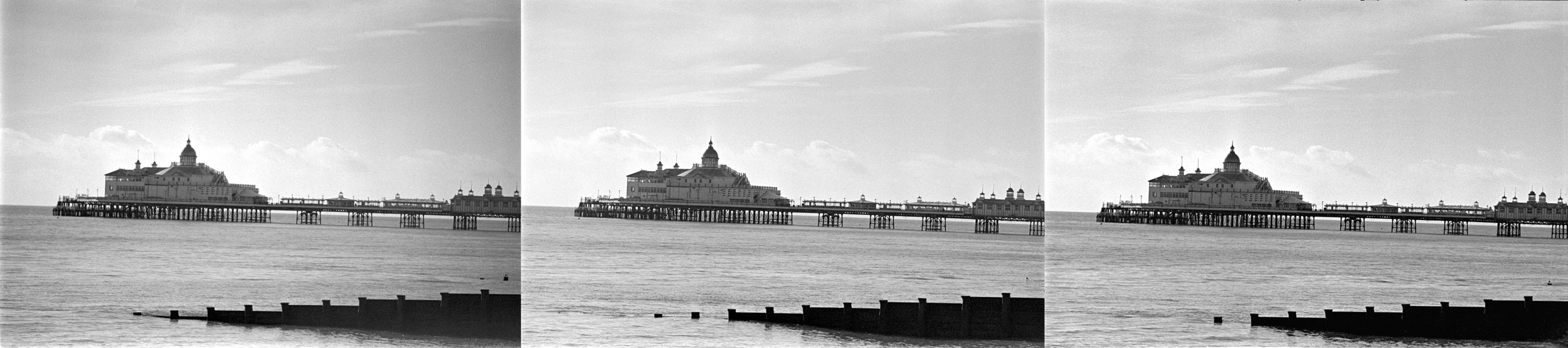
Access at f2.8, f5.6 and f16
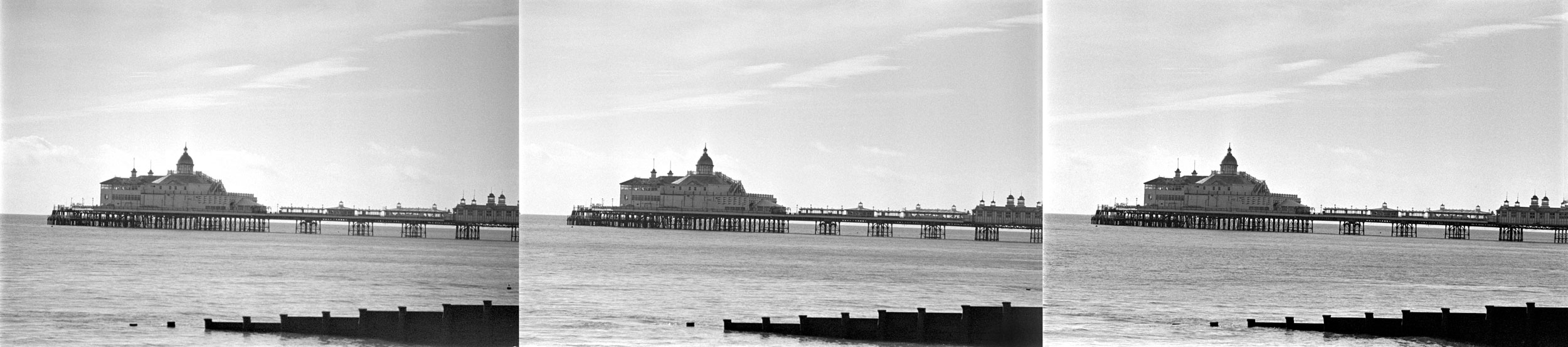
Soligor at f3.5, f5.6 and f16
Results
Digital colour results – infinity focus
All the lenses displayed a level of softness and vignetting at their widest aperture, both the Nikon and Access lens were also even softer on the edges – the Access lens being worse than Nikon. Disappointingly the Hoya lens was very soft overall as well as being low in contrast and showed signs of fringing. The lenses improved at f4 and by f5.6 were better still with only a hint of vignetting still showing, from f8 to f11 all the lenses were reaching their optimum sharpness across the frame. At f16 both Access and Soligor lenses were again equally sharp across the frame, whilst the Nikon and Hoya lenses were starting to lose a little sharpness at the edges. Stopping down to f22 all the lenses were starting to get soft due to diffraction.
Mid range focus test
The results from this test seem to confirm that all the four lenses perform better at the middle of their focus range than at infinity, in that all were equally sharp at f8, sadly however the Hoya lens displayed an obvious lack of contrast despite being a multicoated lens. Incidentally Nikon do say on their ‘The 1001 Nights’ series of articles on the development of a range of various Nikon lenses, that the Series E 135mm lens was balanced for best performance at four to five metres.
Black and white negative film results.
This batch of tests proved a little different from the digital test.
Once again all the lenses were a little soft and showing signs of vignetting at their widest aperture, although this time it was both the Hoya and Access lenses that were softer on the edges, again the Hoya had a lower level of contrast than the other three lenses. Once stopped down to f5.6 all four lenses were sharp over the entire frame and there was only the slightest hint of vignetting. At f16 surprisingly all the lenses were still very sharp across the whole frame.
Conclusions
Using these four lenses meant adopting a couple of different metering methods, both Nikon and Hoya lenses were auto diaphragm – so could be focused and metered in aperture priority (aperture set accordingly). The Soligor lens should in theory operate the same way, but due to an issue with the lens linkage this was not possible and had to be set in manual mode. The Access lens is a pre set design, which means that whilst focusing can be done at full aperture the lens has to be manually stopped down using the stop down ring prior to making the exposure – see the photograph of the lens line up for more clarification.
Worth noting is that the three aftermarket lenses focus rings rotate in the opposite direction to the Nikon lens whilst in practice this is no major problem.
All four lenses worked satisfactorily on digital when shooting at infinity provided they were stopped down to at least f8. The overall colour balance was cooler with both the Access and Soligor lenses, this is more than likely due to the lens coatings. The Hoya is the only lens marked as multi coated, whilst the Nikon is quoted as being single coated on all elements (this was done to keep production costs down) I would guess that both Access and Soligor are probable single coated too.
It must however be said that film photography is where all these lenses perform at their best, being sharper at only 2 stops down and maintaining that sharpness. The only issue is with the Hoya lens due to its lower contrast when compared to the other lenses.
I must also add a special thanks to my good friend Mark for the generous use of the 2 Nikon Series E lenses used in the two lens reviews.
In summing up, if you find a 135mm manual focus lens at a reasonable price, give it a go, you might be pleasantly surprised.
-
A Tale of Two Lenses
I must confess, I have a liking for older lenses. In the main they seem to be more robust in construction and generally less complex in construction.
Whilst browsing the web I came across various references to Kiron lenses and their history of manufacturing lenses for other companies, this got my attention!
A large number of early Series 1 and other Vivitar lenses were produced by Kiron, sometimes these lenses were jointly designed by Kiron and Vivitar and subsequently sold by both brands with slight variations in their appearance to differentiate them.
What is less well publicised is that Kiron also manufactured the Series E lenses for Nikon, these lenses were made exclusively to Nikon’s own design specifications and not sold under any other brand name.
Not long ago whilst browsing a well known auction site! I spotted a Kiron 70 – 150mm lens at a very good price, so I bought it. Ok so it had an Olympus OM lens mount, not a problem since I have amongst my camera collection an Olympus OM film body. A quick message to my good friend Mark and I now had the loan of his Nikon Series E 75 -150mm lens to enable me to perform a comparison. Next problem was could OM mount be adapted for use on a Nikon DSLR and the answer to that is not easily. A slight setback! Never mind back to the auction site and lo and behold a Vivitar 70 -150 lens with a Nikon F mount, needless to say I purchased that quickly. Now I could do a proper comparison between the two lenses.
After a couple of preliminary tests I noticed something odd with regards to the colour balance, so I started looking for another brand of 70-150mm lens to provide another set of grey target images for comparison. As a result I obtained a Hoya 70-150mm f3.8 with a Pentax K mount. Incidentally, whilst Hoya did not manufacture lenses, they did make glass used within the lens They were (and still are) one of the largest producers of optical glass in Japan.

Lenses from left to right – Nikon 75-150mm, Vivitar 70-150mm, Kiron 70-150mm, Hoya 70-150mm
Specifications
Nikon Kiron/Vivitar Hoya
Focal Length 75 – 150mm one touch zoom 70 -150mm one touch zoom 70 – 150mm one touch zoom
Construction 12 elements in 9 groups 15 elements in 10 groups 12 elements in 9 groups
Aperture Range f3.5 – f32 f4 (Kiron) f3.8 (Vivitar) – f22 f3.8 – f22
Focus Range 1m – Infinity 0.9m (macro) – Infinity 1.5m – Infinity
Filter Size 52mm 52mm 55mm
Weight 520g 585g 481g
Length 117mm 97mm 127mm

Worth noting- Nikon lens has depth of field markings, but no infra red adjustment; whereas the other three lenses only have infra red adjustment markings
Testing Procedure
The Nikon and Vivitar lenses were attached to a Nikon D800 body mounted on a Manfrotto 190 tripod, shutter actuated by remote control to eliminate movement. ISO set to 100, daylight balance, zero exposure adjustment, matrix metering, camera set to aperture priority and images recorded in Raw.
A series of exposures were made from f3.5 (f3.8 Vivitar) to f22 and at 75mm to 150mm for the Nikon lens and 70mm to 150mm for the Vivitar lens.
In the case of the grey target tests, camera distance was changed when the lenses were zoomed to maximum to ensure the target remained a similar size.
Out of interest I wanted to compare both the Kiron and Vivitar variations against the Nikon and Hoya lenses – so I purchased an adapter to enable me to put the OM mount Kiron lens on my Fuji X-T1 body (I already own Nikon F to Fuji and Pentax K to Nikon F adapters) For the grey test the settings used were as before, the only exception being that the ISO was set at 200- this is the base ISO for the X-T1.
All images taken were viewed in Adobe Photoshop and Adobe Camera Raw on a colour calibrated monitor.
Results
The first thing that I noticed when comparing initial tests was that the Vivitar lens produced a more yellow image. This led me to the purchase of the Hoya 70 – 150mm lens to provide an additional reference point. When comparing all 4 lenses in Adobe Camera Raw, I made a spot colour check at the same quadrant on the grey target. Both the Nikon and Hoya lenses gave a near even RGB reading, whereas both Kiron made lenses showed a dip in the blue values.
I tested both Nikon and Vivitar for full frame sharpness and coverage – photographs of the local pier were taken at 70mm and 150mm at all full apertures from f3.5 / f3.8 to f22.
Both lenses exhibited obvious vignetting in the corners at full aperture, reducing at f5.6 and gone at f8 to minimum aperture.
Sharpness was quite a mixed bag – at 70mm both lenses were soft on the edges at full aperture, sharpening up at f8 and starting to drop off at f16. Centre of frame results showed the Nikon lens again being soft a full aperture, sharpening up by f8 and dropping off by f16, the Vivitar however was sharp by f5.6 but again dropping off at f16. One worrying issue was the fact that at full aperture the Vivitar lens a substantial amout of flare in the highlights, once the lens was stopped down to f5.6 this had cleared.

Vivitar 70-150 at 70mm

Nikon 75-150 at 75mm

Flare on Vivitar lens at 70mm at f3.8
The 150mm setting tests gave some very strange results indeed.
The Nikon displayed serious red fringing at f3.5, this cleared by f8. In terms of sharpness the lens was a little soft at the edges wide open, improving at f5.6, peaking at f11 but starting to drop off at f16 and f22.
The Vivitar lens was soft at the edges at f3.8, this improved, peaking at f8 and then gradually dropping off to f22.
Vignetting was similar to that with both lenses at 70/75mm in that it was noticable at full aperture and again reducing at f5.6 and clearing completely by f8.

Vivitar 70-150 at 150mm

Nikon 75-150 at 150mm

Red fringing on Nikon lens at 150mm at f3.5
The 4 lens test
Obviously, using the four lenses on a DX sized sensor as fitted to the Fuji X-T1, vignetting was not an issue – I was more interested in the variations in colour balance and sharpness.
As previously discussed, both the Kiron and Vivitar lenses displayed a yellow cast, the Nikon lens was the most neutral and the Hoya lens somewhere in between.


Kiron 70-150mm Vivitar 70-150mm


Nikon 75-150mm Hoya 70-150mm
In terms of sharpness the Nikon was a fraction sharper than the other three lenses – who were equal in sharpness, although the difference would not be a deal breaker. Interestingly, when used on the Fuji X-T1, the Nikon lens appeared to produce overexposed images at the 75mm end of the zoom range – but correctly exposed a the 150mm end.

Kiron at 70mm

Vivitar at 70mm

Nikon at 70mm

Nikon at 150mm

Hoya at 70mm
Sample images

Nikon 75-150mm at f8 with adjustments made to highlights and shadows

Vivitar 70-150mm at f8 with adjustments made to highlights and shadows
Conclusion
Although three of the lenses were produced by the same manufacturer, there are differences – as previously mentioned there is a variation in stated maximum aperture between the Kiron and Vivitar lenses, although in practical terms it is unnoticeable. Both Kiron and Vivitar lenses have half stop clicks between maximum aperture and f16 and full stop to f22, whilst both Nikon and Hoya lenses have clicks a full stops only. All the lenses feel well built, however the Nikon lens suffers from zoom slip (it is a well known issue with this particular lens) this could be down to the lens being made to a price, although this takes nothing away from the optical quality of the lens. Whilst the Kiron and Vivitar have ‘macro’ setting, this is no more than close focus, although at 0.9metres it is hardly close focus, the Nikon focuses down to 1 metre and the Hoya brings up the rear at 1.5 metres. In terms of size and weight both the Nikon and Hoya lenses are longer and yet lighter than the Kiron and Vivitar.
The all important question is which lens to buy? On price alone the Nikon Series E lens nearly always cost noticeably more than the other three lenses, but colour balance and general build is close to Nikkor lenses if loyalty to manufacturer is an important factor, although the strange red fringing was a little worrying. Also worth noting is that third party Nikon F mount manual focus lenses are not as plentiful as other camera brands. The yellow cast with the Kiron/Vivitar duo can be easily corrected in post processing, although if taking photographs on transparency film the cast will be more obvious. It really is a case take your pick, any of these lenses will give you good results once stopped down a little.