K & F Magnetic Filters
This review starts from a post that I saw on Facebook.
A company from whom I have often reviewed filters posted that they were releasing a new innovative magnetic filter system. Now that got my interest at once!
I started checking what other systems were currently on the market and how their prices compared, being a frugal person I baulked at some of the prices.
What I did however come across was a set of magnetic filters being sold by K & F Concept at a very reasonable price, (approximately a third of the price of some manufacturers) hence the reason I purchased them.
What does the kit contain?
Each kit is supplied in a zipper case and consists of a filter holding ring (this screws into the lens filter thread), multi coated UV filter, circular polarising filter and a ND1000 (10 stop) neutral density filter. Worth noting is that each kit is filter size specific, however I usually purchase a larger size and use an additional filter thread adapter ring to fit lenses with a smaller filter thread.
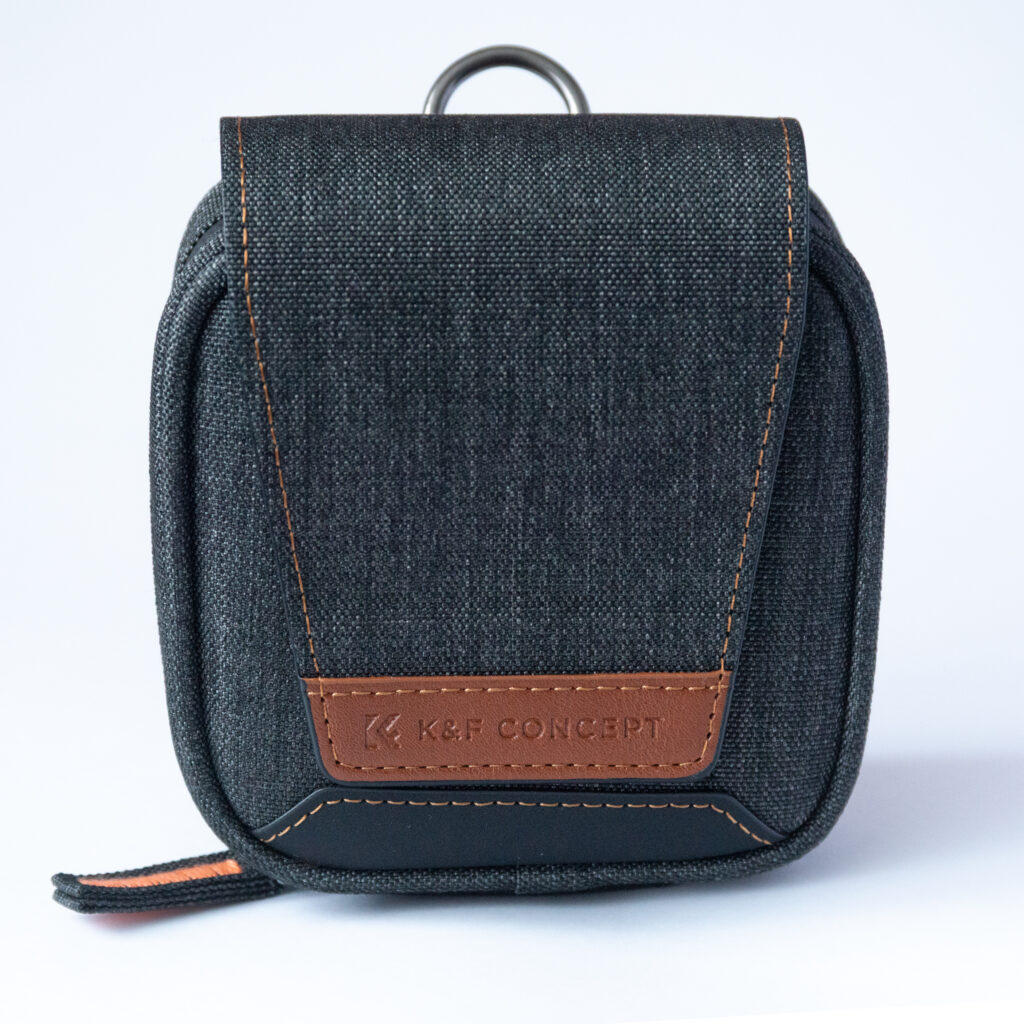
Filter case
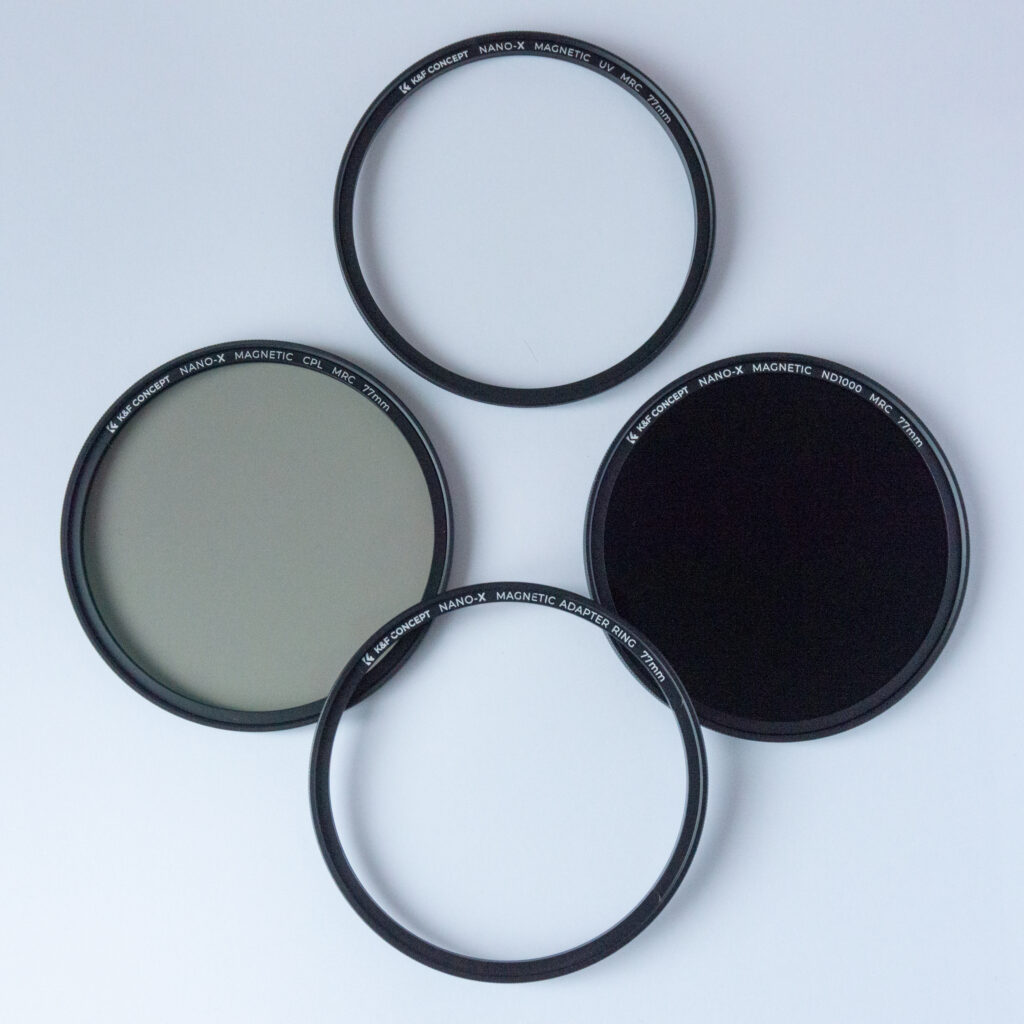
Top: UV filter, left: CPL filter, right: ND1000 filter, bottom: adapter ring
How the filter kit was tested
All the tests were performed using a Nikon D800 body mounted on a Camlink tripod, shutter actuated by remote control to eliminate movement. ISO set to 100, daylight balance, zero exposure adjustment, matrix metering, camera set to aperture priority and images recorded in Raw. Weather conditions were wind free with a bright sunny sky. Images were converted to Jpeg in Adobe Camera Raw with zero sharpness added. Images were viewed on a colour corrected monitor. The grey target tests were taken using a Nikkor 80-200mm f2.8AF ED lens, lake tests were taken using a Cosina 19-35mm f3.5-f4.5 AF lens and the pier test images were taken on a Nikkor 24-85mm f3.5-f4.5 AFS ED G lens.
The filters in use
The adapter ring is first screwed into the lens filter ring, additional filters can now be placed into the adapter, incidentally, the UV filter also has a thread on it so can be used as an alternative filter holder, in all cases the magnets holds the subsequent filter firmly in place. To prove how well the filters hold, I ran some tests in very windy conditions without any issues. The polarising filter rotates fairly smoothly, but obviously not quite as smoothly as a conventional polarising filter.To remove a filter, I suggest lifting the filter off by placing a fingernail under the rear of the filter.
Several filters can be stacked together – although care has to be taken when using wide angle lenses due to the risk of vignetting. Again I put this to the test using a Nikon D7000 and a Tamron 10-24mm lens ( equivalent to approximately 15-36mm on a full frame camera) using the adapter and the polarising filter. The result was vignetting at 10mm – although oddly only 1n one corner, by 11mm the image was free of vignetting. See samples below.
 |
 |
Tamron at 10mm Tamron at 11mm
Test Results – Grey Target
The grey target test images show some interesting results. RAW images were opened in Adobe Camera Raw, the eyedropper was placed in the innermost lower quadrant of the grey target centre – a reading was made the colour quantities displayed.
There was a fractional difference between without a filter and the UV filter, just miniscule blue shift – in isolation it would not be noticed. I would go so far as to say that it actually improves the image. The polarising filter displayed a shift into the red, not by a massive amount, noticeable on a grey target, but not so much on a subject such as a landscape. The ND1000 filter moved colours towards the blue, again not a huge shift – better than some ND filters that will produce a strange colour balance when making a timed exposure due to their passing a large amount of infrared light.
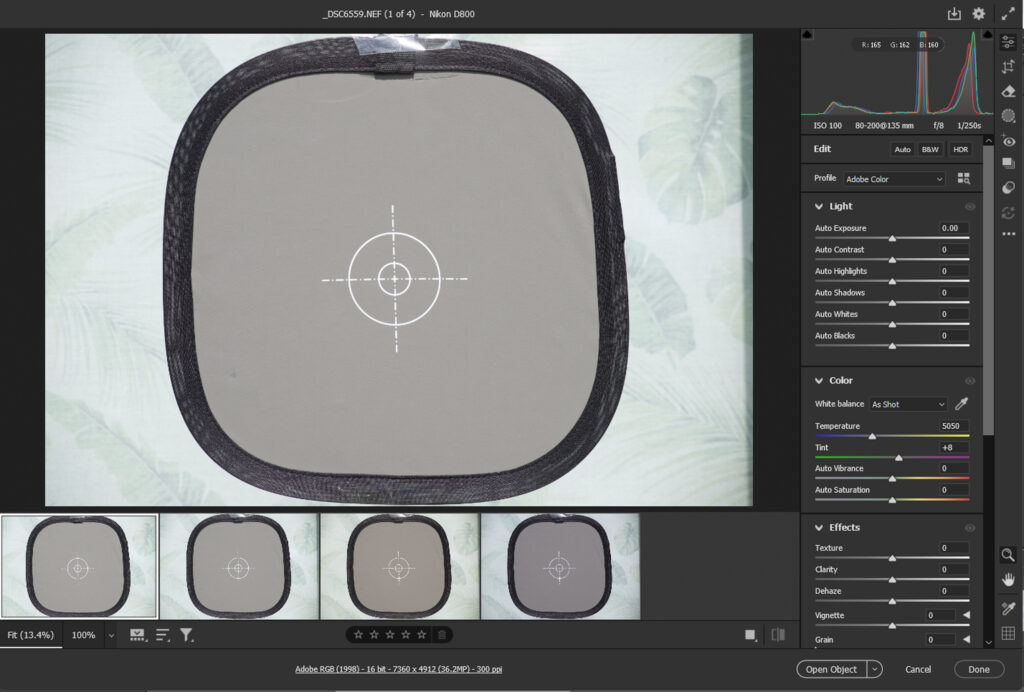 |
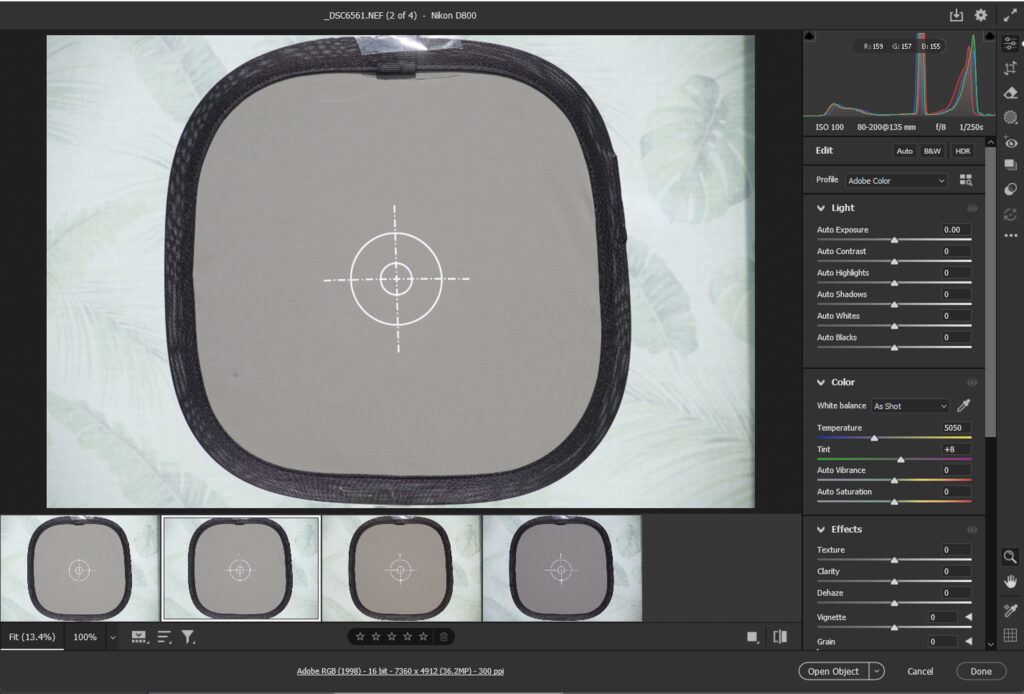 |
Without filter UV filter
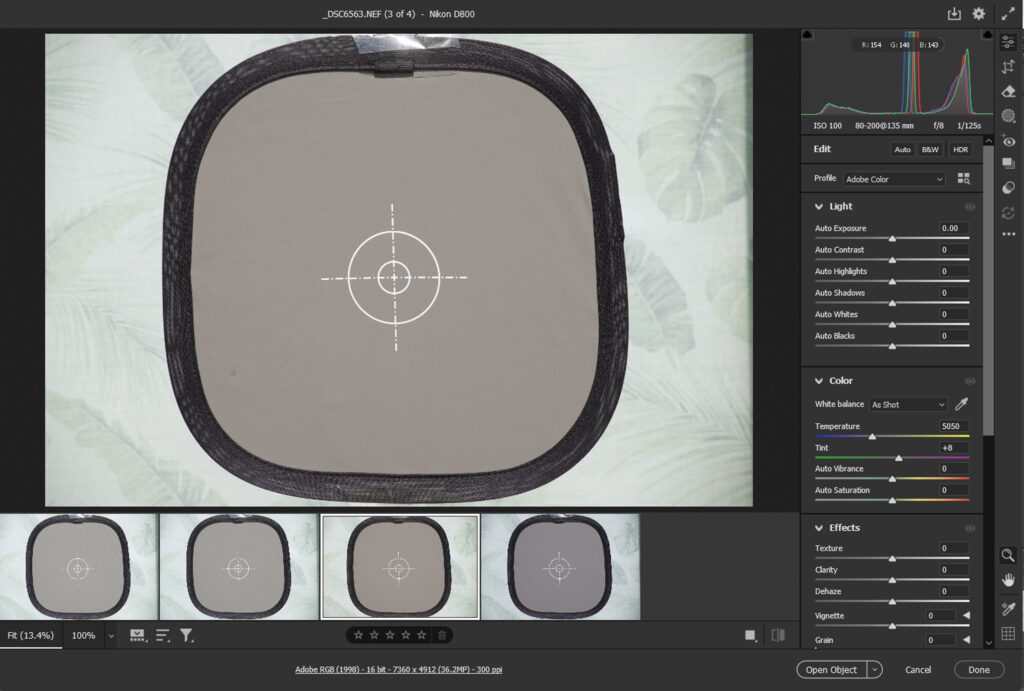 |
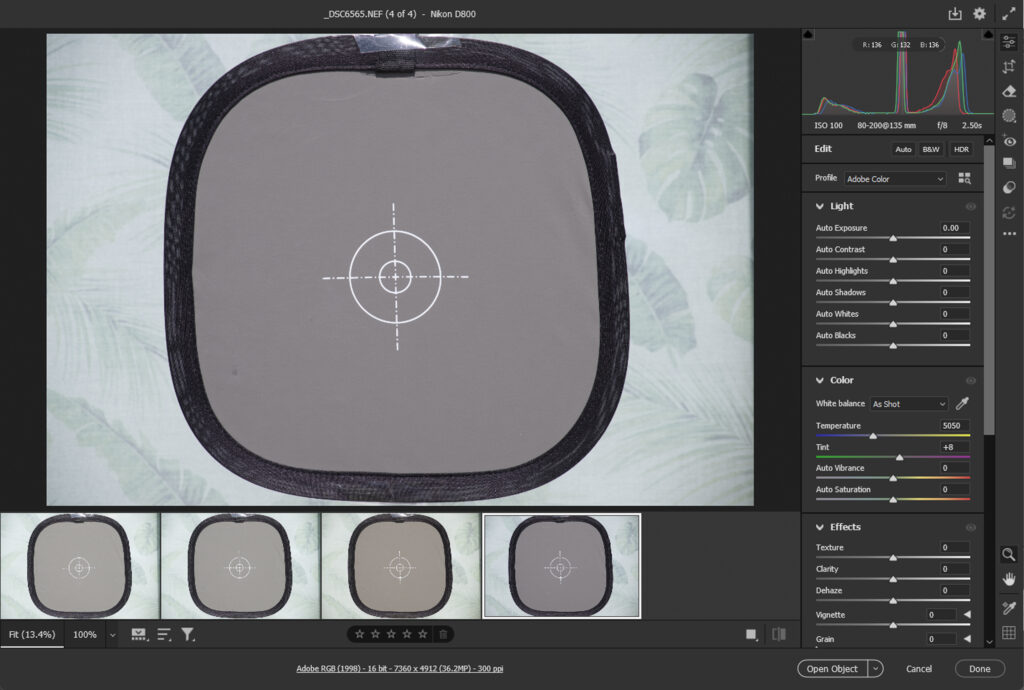 |
Polarising filter ND1000 filter
Test results – Lake
The aim of this series of photographs was to see how the filters reproduced colours in a real world environment. Obviously the colour shifts seen in the grey target tests were nowhere as noticeable. There was one curious occurrence in that when rotating the polarising filter through 90 degrees there was a colour shift, viewed separately one would not see the difference. I have produced a sample image using both images to show the difference.
 |
 |
Without filter UV filter
 |
 |
Polarising filter- polarised for the water Polarising filter- polarised for the sky

ND1000 filter
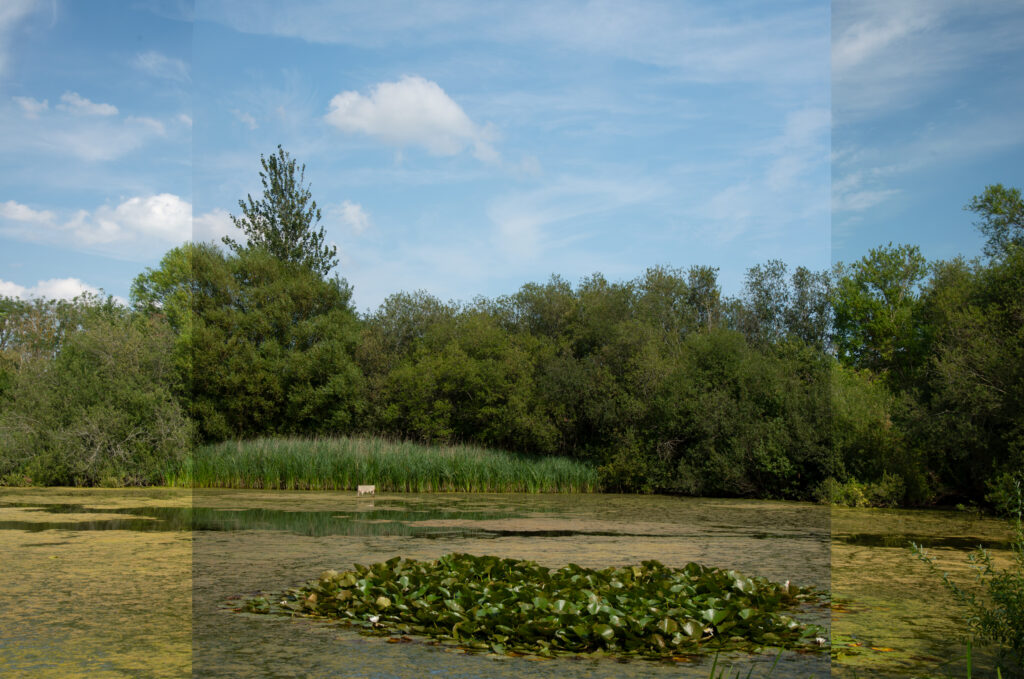
Centre section- polarising filter rotated 90 degrees
Sharpness tests – Pier
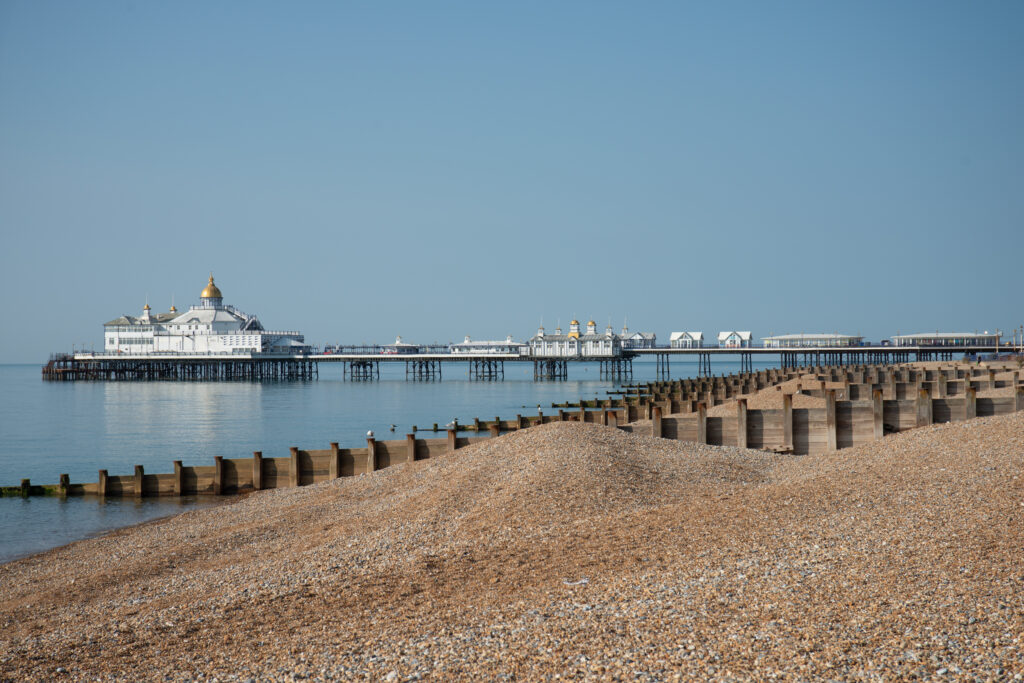
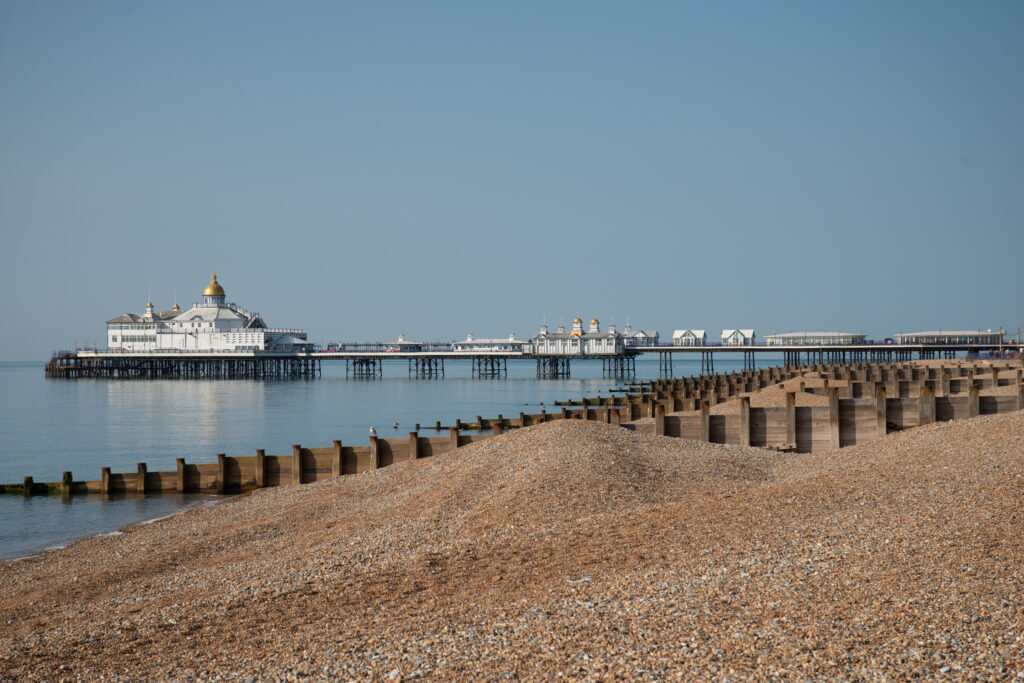
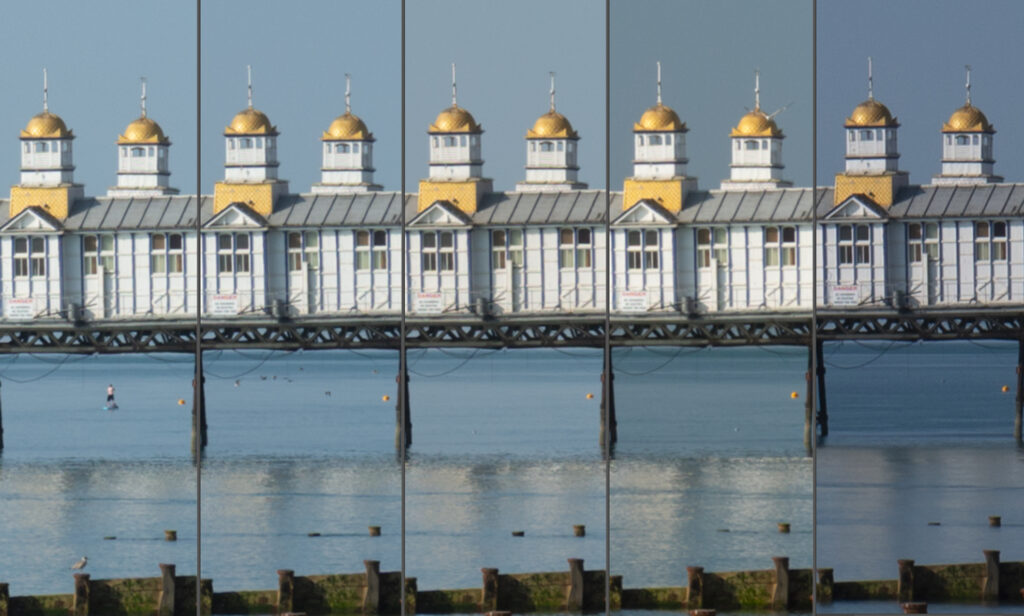
Once again my target for the sharpness tests was the reliable subject of Eastbourne Pier. As usual the camera was mounted on a tripod and the shutter was actuated via a remote release, all frames were taken using an aperture of f8 and aperture priority, with 1/3 stop of underexposure set.
Having examined all the images at 100% in Adobe Photoshop, it can be reported that the only slight change in sharpness appeared to be when using the polarising filter to darken the sky, other than that sharpness was maintained throughout. As noted previously there is a slight red colour shift with the polarising filter and a slight blue shift with the ND1000 filter, again in isolation the colour shift is not too obvious.
 |
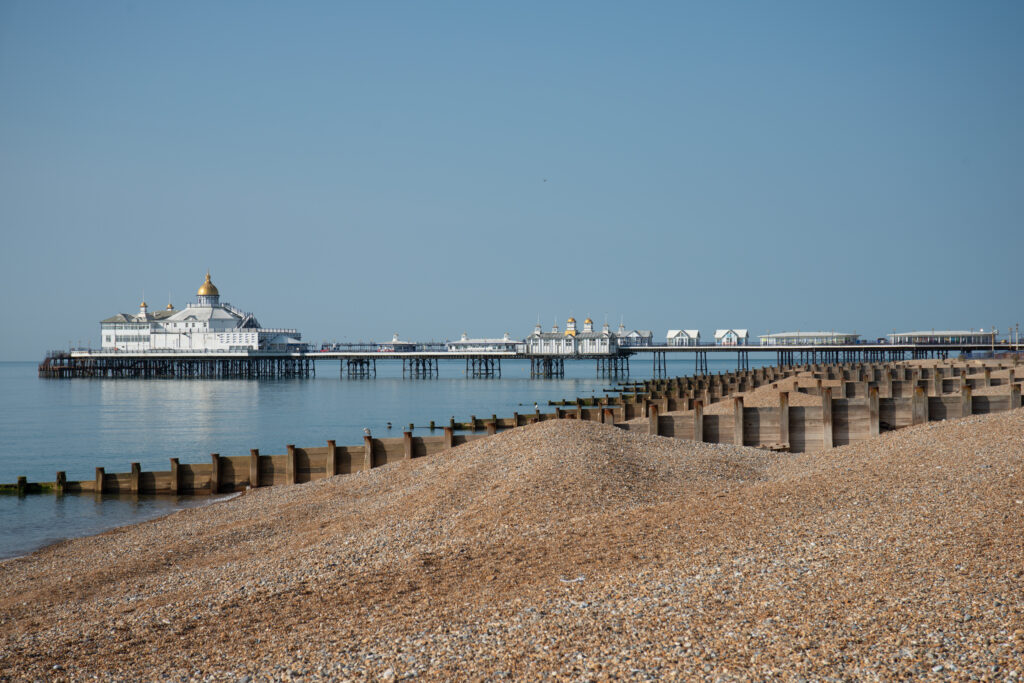 |
Without filter With UV filter
 |
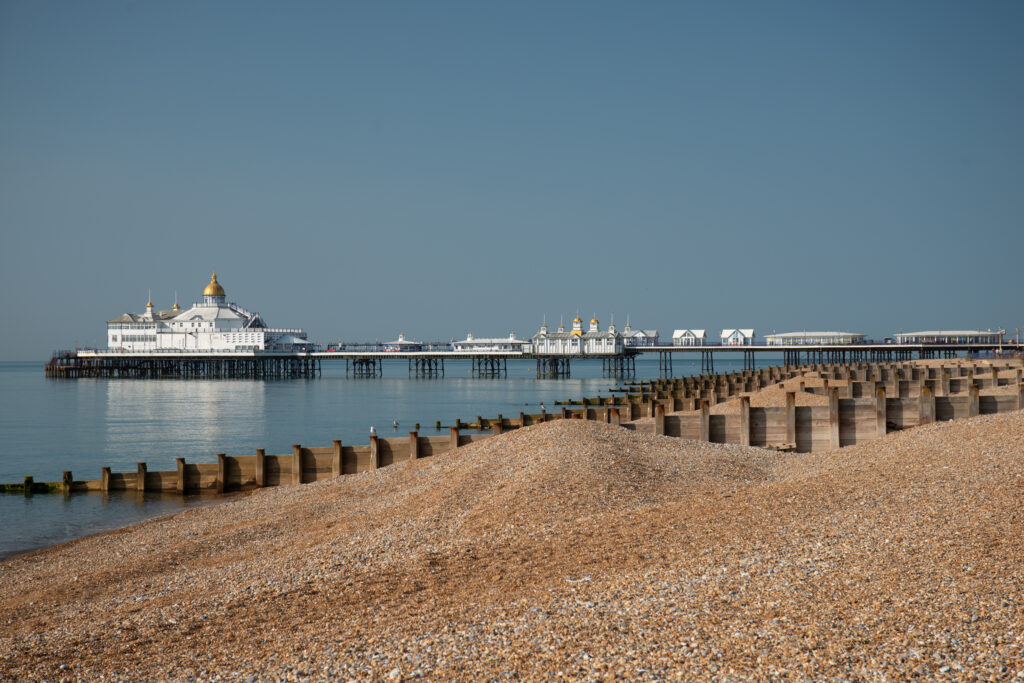 |
Polarising filter polarised for water Polarising filter polarised for sky
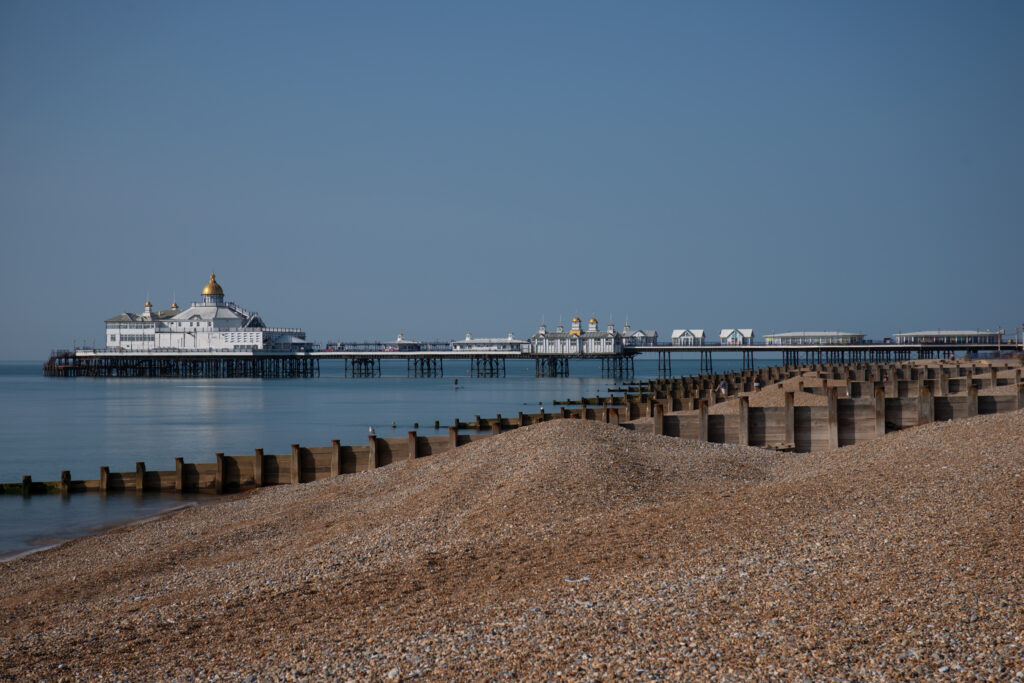
ND1000 filter
 |
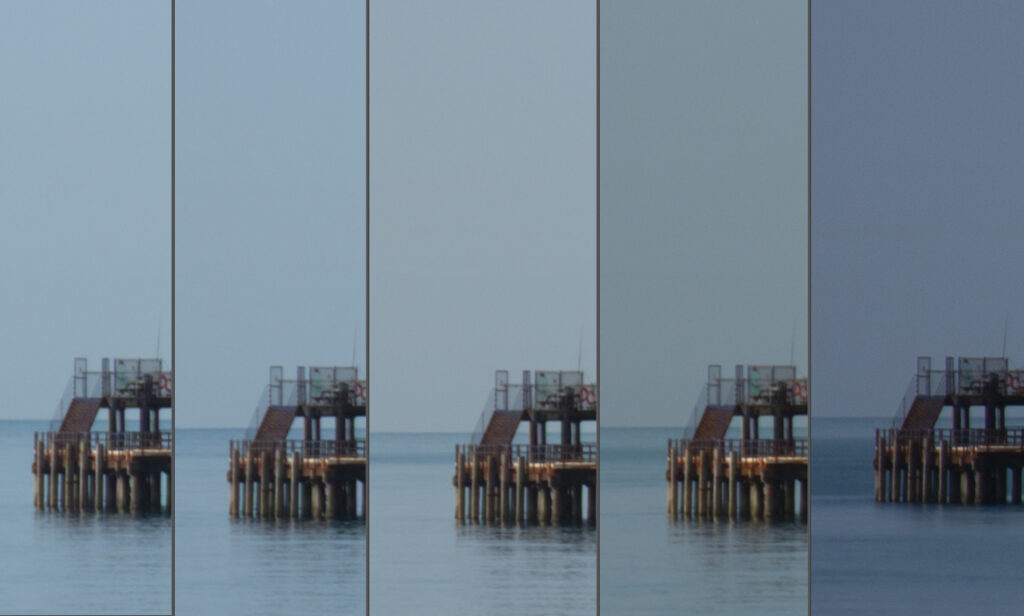 |
Pier centre Pier end
Sample photographs

Long exposure plus K & F Concept ND1000 filter

Long exposure plus K &F Concept UV filter
Conclusions
The K & F Concept magnetic filter set is easy to use, the magnets are strong, holding the filters firmly in place – as mentioned earlier even in a fairly strong wind the filters did not dislodge. Importantly sharpness was maintained when using the filters, there were some colour shifts, but these are easily correctable with photo editing software.
K & F Concept range do not compromise on quality, other manufacturers may offer a more extensive or unique filters – however K & F Concept magnetic filters prove that you do not have to spend a small fortune to obtain very good results.
The filter kits offer the best value for money, various configurations and an extensive range of filter sizes are available. K & F Concept filters are available direct from their website and also selected dealers.
To conclude the K & F Concept magnetic filter set have definitely earned a place in my camera bag.
Please note: I purchased this filter kit personally and have not received additional products or commission for the writing of this article.