Nikon Series E 135mm lens vs 3 aftermarket lenses
I know it’s a bit of a weird title! The title is deliberately a little vague, because at the time of creating the post I had no idea what other lenses I could obtain.
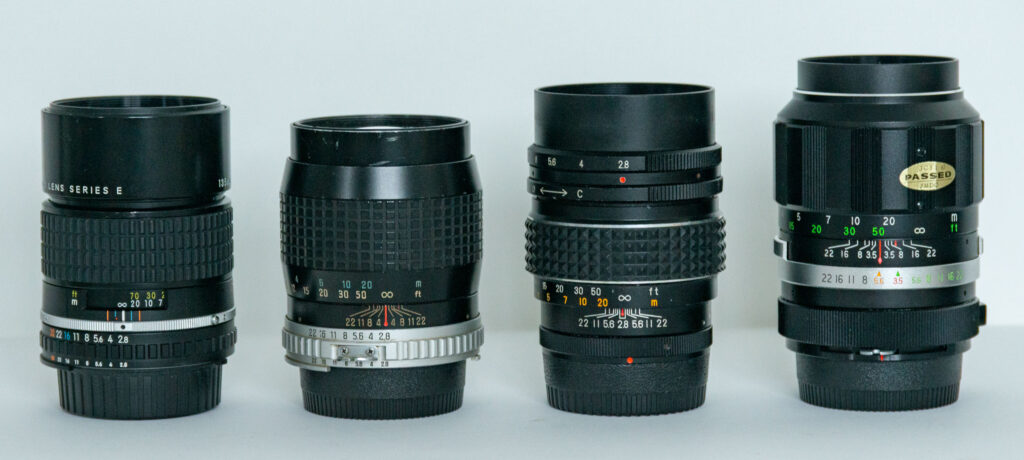
Now I have a quartet of lenses to test and compare – starting off we have the Nikon 135mm f2.8 ‘made to Nikon specification’ Series E lens, next is a Hoya 135mm f2.8, followed by a preset Access SQ 135mm f2.8 and finally a Soligor 135mm f3.5. All the lenses in this test were made circa 1980’s.
The purpose of the test was to see how well these vintage lenses perform with a full frame digital camera, as well as with traditional black and white negative film
A little background information
A good few years ago (alright a lot of years ago!) When zoom lenses were not so popular or refined as they are now, chances are that when buying a new lens to suppliment the standard 50mm lens that more than likely came with your camera, there were two choices a wide angle lens or a telephoto lens. If you opted for a telephoto, then chances were it would be a 135mm lens.
All the main camera manufacturers had their own version of a 135mm lens available – generally it would have a maximum aperture of f2.8 although one or two offered a slightly slower and cheaper option with a maximum aperture of f3.5. In addition to this there was a vast number of third party 135mm lenses available – in reality despite the number of brands on offer, the number of actual manufacurers was significantly smaller. Prime examples are in our test selection :The Nikon lens was made by Kino Optical (Kiron) to Nikon specifications, whereas the Hoya 135mm lens was a rebadged Tokina made lens (Hoya supplied the glass), Access 135mm was also available badged as a Photax lens amongst other names – the actual manufacturer could possibly have been Kobori, finally Soligor 135mm was made by Tokina.
Testing Procedure
For the colour digital tests the lenses were in turn attached to a Nikon D800 body mounted on a Camlink tripod, shutter actuated by remote control to eliminate movement. ISO set to 100, daylight balance, zero exposure adjustment, matrix metering, camera set to aperture priority and images recorded in Raw. Weather conditions were wind free with an overcast sky. Images were converted to Jpeg in Adobe Camera Raw with zero sharpnees added
A series of exposures were made from f2.8 (f3.5 Soligor) to f22 and lenses were focused at infinity for the photographs of the pier, whilst the photographs of the breakwater exposure was made at f8 and the lens was focused on the third breakwater upright using focus confimation.
The black and white film tests were performed using a Nikon F90x loaded with Kodax Double X film and processed in 510 Pyro. Again the camera was mounted on my trusty Camlink tripod and shutter actuated by remote control. ISO was set to 100, zero exposure adjustment, spot metering and camera set to aperture priority. Weather conditions were sunny, bright and wind free. Images were scanned on a Plustek OpticFilm 7600i at 1800dpi using VueScan software with shapening set to none.
Exposures were made at maximum aperture (f2.8 and f3.5 for the Soligor lens), f5.6 and f16 – lenses focused visually at infinity.
Specifications
Nikon Hoya Access Soligor
Focal Length 135mm 135mm 135mm 135mm
Construction 4 elements in 4 groups 5 elements in 4 groups 5 elements in 4 groups 5 elements in 4 groups
Aperture Range f2.8 – f32 f2.8 – f22 f2.8 – f22 f3.5 – f22
Focus Range 1.5m – Infinity 1.5m – Infinity 2.2m – Infinity 1.8m – Infinity
Filter Size 52mm 55mm 58mm 49mm
Weight 390g 407g 362g 393g
Length 104mm 79mm 88mm 95mm
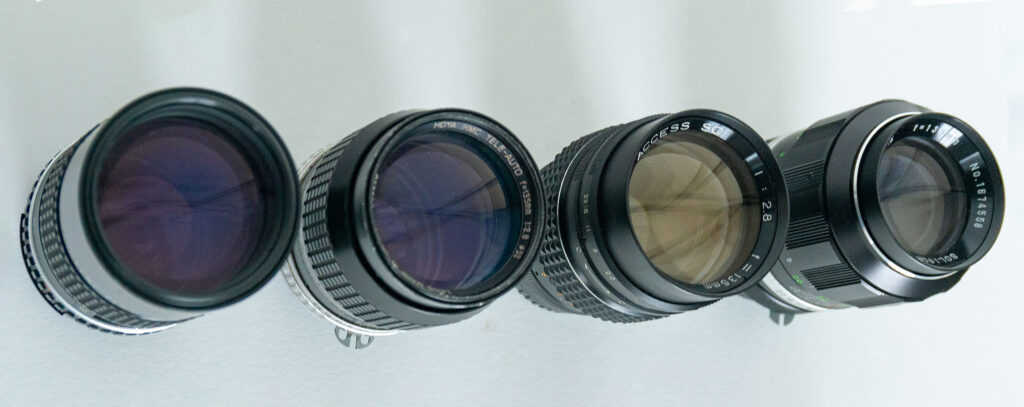
Notice how each of the lenses has a different coating on the optics, this results in a subtle difference in contrast and colour balance.
The Results
Digital

Nikon from f2.8 to f22

Hoya from f2.8 to f22

Access from f2.8 to f22

Soligor from f3.5 to f22
Digital mid range test.
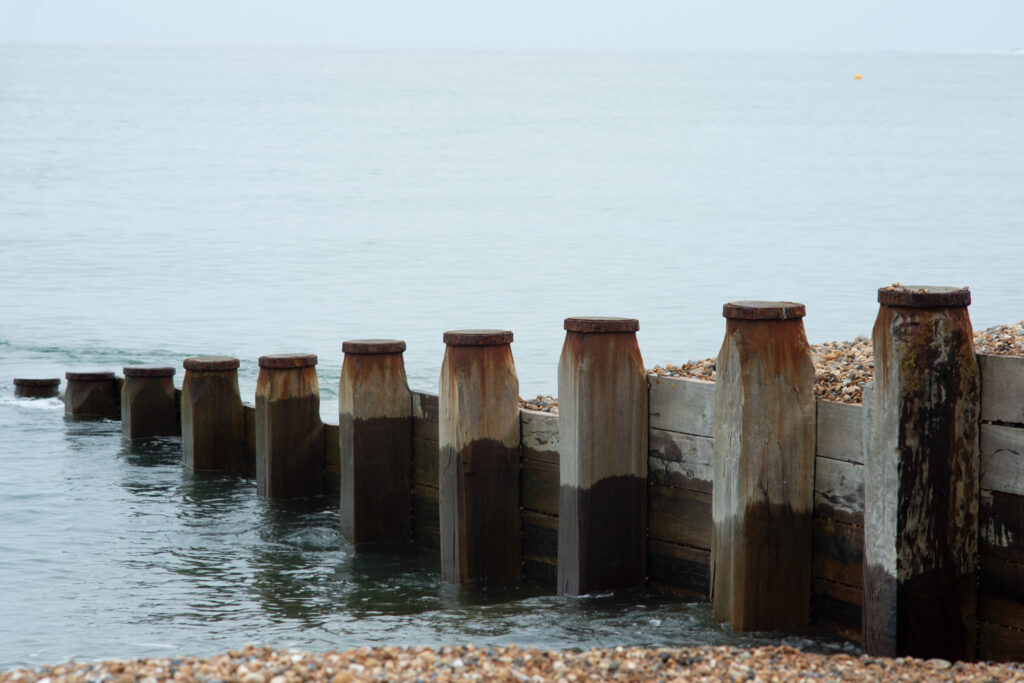
Nikon at f8
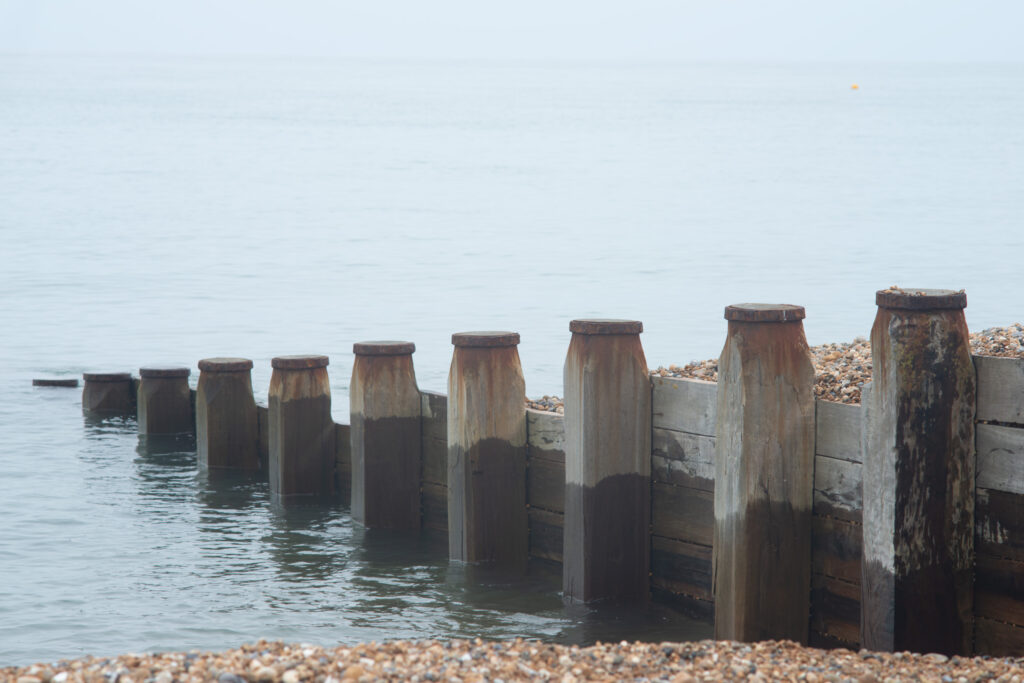
Hoya at f8

Access at f8

Soligor at f8
Black and white negative film
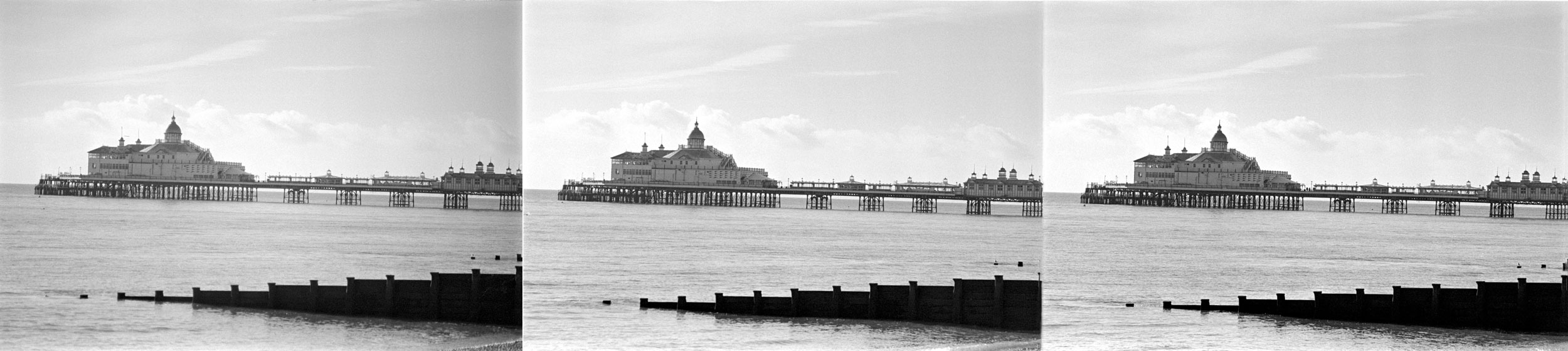
Nikon at f2.8, f5.6 and f16
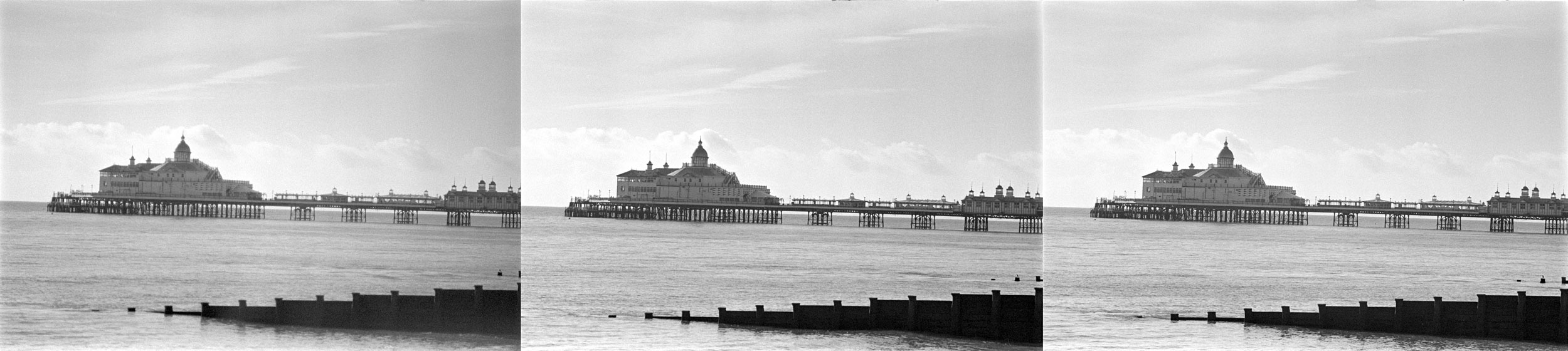
Hoya at f2.8, f5.6 and f16
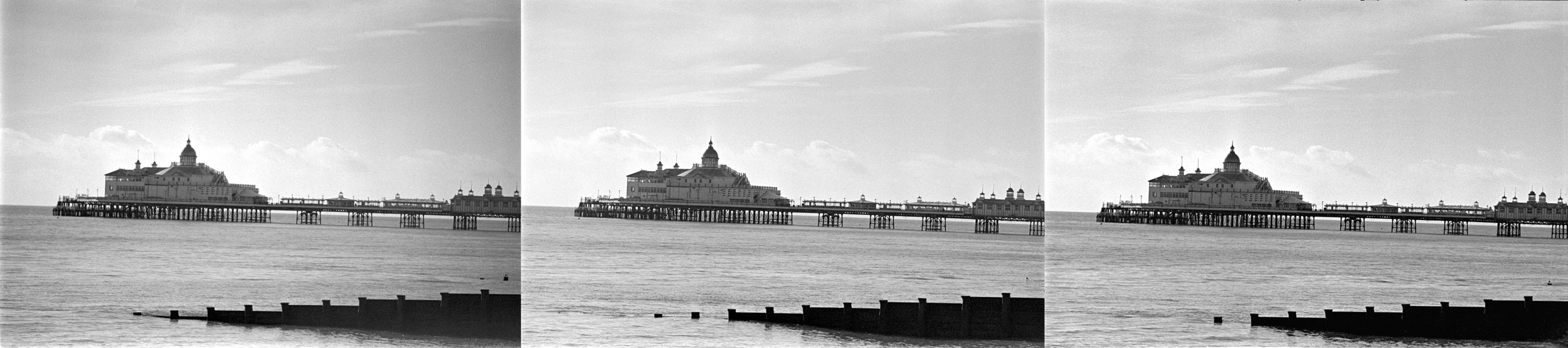
Access at f2.8, f5.6 and f16
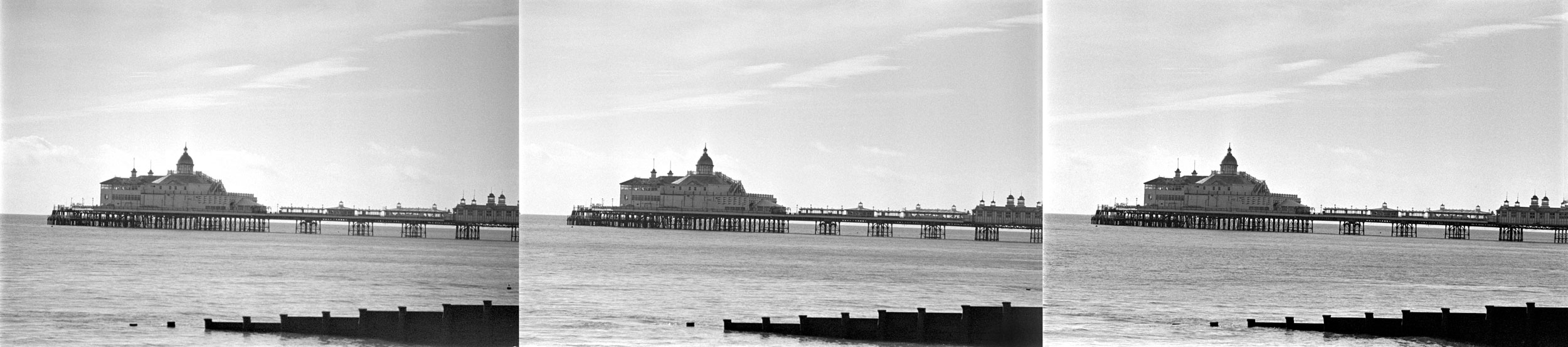
Soligor at f3.5, f5.6 and f16
Results
Digital colour results – infinity focus
All the lenses displayed a level of softness and vignetting at their widest aperture, both the Nikon and Access lens were also even softer on the edges – the Access lens being worse than Nikon. Disappointingly the Hoya lens was very soft overall as well as being low in contrast and showed signs of fringing. The lenses improved at f4 and by f5.6 were better still with only a hint of vignetting still showing, from f8 to f11 all the lenses were reaching their optimum sharpness across the frame. At f16 both Access and Soligor lenses were again equally sharp across the frame, whilst the Nikon and Hoya lenses were starting to lose a little sharpness at the edges. Stopping down to f22 all the lenses were starting to get soft due to diffraction.
Mid range focus test
The results from this test seem to confirm that all the four lenses perform better at the middle of their focus range than at infinity, in that all were equally sharp at f8, sadly however the Hoya lens displayed an obvious lack of contrast despite being a multicoated lens. Insidentally Nikon do say on their ‘The 1001 Nights’ series of articles on the development of a range of various Nikon lenses, that the Series E 135mm lens was balanced for best performance at four to five metres.
Black and white negative film results.
This batch of tests proved a little different from the digital test.
Once again all the lenses were a little soft and showing signs of vignetting at their widest aperture, although this time it was both the Hoya and Access lenses that were softer on the edges, again the Hoya had a lower level of contrast than the other three lenses. Once stopped down to f5.6 all four lenses were sharp over the entire frame and there was only the slightest hint of vignetting. At f16 surprisingly all the lenses were still very sharp across the whole frame.
Conclusions
Using these four lenses meant adopting a couple of different metering methods, both Nikon and Hoya lenses were auto diaphragm – so could be focused and metered in aperture priority (aperture set accordingly). The Soligor lens should in theory operate the same way, but due to an issue with the lens linkage this was not possible and had to be set in manual mode. The Access lens is a pre set design, which means that whilst focusing can be done at full aperture the lens has to be manually stopped down using the stop down ring prior to making the exposure – see the photograph of the lens line up for more clarification.
Worth noting is that the three aftermarket lenses focus rings rotate in the opposite direction to the Nikon lens whilst in practice this is no major problem.
All four lenses worked satisfactorily on digital when shooting at infinity provided they were stopped down to at least f8. The overall colour balance was cooler with both the Access and Soligor lenses, this is more than likely due to the lens coatings. The Hoya is the only lens marked as multi coated, whilst the Nikon is quoted as being single coated on all elements (this was done to keep production costs down) I would guess that both Access and Soligor are probable single coated too.
It must however be said that film photography is where all these lenses perform at their best, being sharper at only 2 stops down and maintaining that sharpness. The only issue is with the Hoya lens due to its lower contrast when compared to the other lenses.
I must also add a special thanks to my good friend Mark for the generous use of the 2 Nikon Series E lenses used in the two lens reviews.
In summing up, if you find a 135mm manual focus lens at a reasonable price, give it a go, you might be pleasantly surprised.